
Your family dinners feel like walking through a minefield. Or maybe you’ve stopped having them altogether because the tension is too thick to swallow.
Maybe it’s you and your adult kids who can’t seem to talk without it turning into accusations and defensiveness. Maybe it’s the clash between your traditional values and your adult child’s American identity. Maybe it’s siblings who haven’t spoken in years, or a family system that’s never recovered from loss, divorce, or betrayal.
Family therapy isn’t about sitting in a circle sharing feelings while everyone nods politely. It’s about understanding how your family system actually works—the roles people play, the unspoken rules that govern behavior, the generational patterns that keep repeating, and learning how to shift those dynamics so everyone can breathe.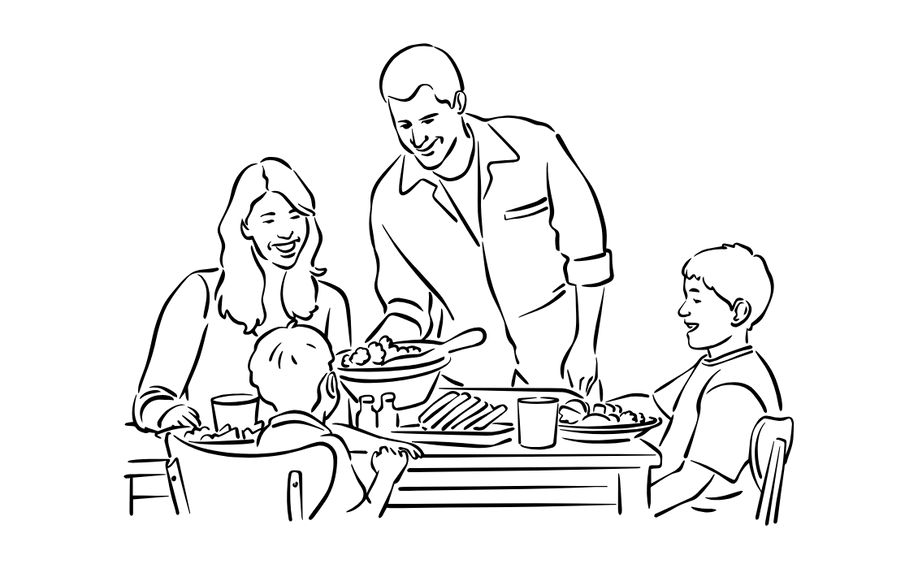
Your adult chuldren are pulling away, breaking rules, or exploding with anger. You're trying to connect but everything you say makes it worse.
Old sibling rivalries have hardened into permanent rifts. Family gatherings are tense or avoided altogether.
Distance, resentment, misunderstanding, it's been this way for years and no one knows how to fix it.
You raised your kids with traditional values, but they're "too American" now. They say you're controlling; you say they're ungrateful.
Every conversation turns into an argument. Someone's always the "bad guy." No one feels understood.
Someone left, someone died, or something happened, and your family has been fractured ever since.
Yes, and we’ll interrupt that cycle together.
Family therapy is an active, collaborative process where everyone learns new ways of relating to each other.
Session 1-2: Assessment & Understanding Family Patterns
We’ll explore what brought your family to therapy, what’s been tried before, and what’s not working. I’ll help you identify the core family dynamics, the roles people play, the unspoken rules, and the patterns that keep repeating. By the end of session 2, you’ll have clarity on what we’re actually working on.
Session 3-6: Understanding Each Person’s Perspective
Everyone gets heard without interruption. I create a space where each family member can share their experience, their hurt, and their needs. Often, this is the first time people actually listen to each other without getting defensive.
Session 7-12: Interrupting Patterns & Building New Skills
This is where transformation happens. We practice new communication strategies IN SESSION (not just as homework). Family members learn how to express needs, set boundaries, and respond to each other in ways that create connection instead of conflict.
Session 13-20: Addressing Deeper Issues
Once communication improves, we go deeper: generational patterns, unspoken resentments, unresolved grief, cultural conflicts, and how to create a family dynamic where everyone feels valued and heard.
Session 20+: Maintenance & Integration
As things improve, we shift to less frequent sessions, every other week, then monthly check-ins. The goal isn’t to keep you in therapy forever; it’s to give your family the tools to navigate conflicts on your own.
Families often come in with a “identified patient”, the kid who’s acting out, the parent who’s “too strict,” the sibling who’s “always dramatic.” I help families see that the “problem” is usually a symptom of a larger family dynamic.
Often, the patterns destroying your family aren’t even yours, they’re inherited from your parents, grandparents, or culture. We identify those patterns and break the cycle so they don’t get passed to the next generation.
As an immigrant myself (born in India, trained in the U.S.), I understand the unique challenges immigrant families face: cultural clashes, generational differences, language barriers, and the pain of feeling “caught between two worlds.”
My job isn’t to figure out who’s “right” or “wrong.” It’s to help your family understand how you got stuck and how to move forward together.


Not necessarily. Sometimes we start with parents only, or just the siblings, or a parent-child dyad. We’ll figure out the right configuration based on what you’re working on. As therapy progresses, we may bring in other family members.
You can still make progress even if one person won’t participate. Often, when other family members shift how they interact, the resistant person becomes more open to joining later.
That’s common. Adult children often feel like they’re the “problem” being dragged to therapy. I help reframe it: “We’re ALL here to improve how we communicate as a family, not to fix you.” Most adult children warm up once they realize I’m not taking sides.
Most families see meaningful progress within 4-6 months (16-24 sessions). Some issues resolve faster, others take longer. We’ll check in regularly to assess progress.
Not all therapists are the right fit, and not all approaches work for every family. If past therapy felt too slow, too focused on one person, or like nothing actually changed, this will be different. Let’s talk about what didn’t work before.
Absolutely. I work with adult siblings navigating conflict, adult children repairing relationships with aging parents, extended family dynamics, and multigenerational families.

Tuesday – Friday: 11 AM – 7 PM
Saturday: 10 AM – 4 PM
401 North Michigan Avenue,
Suite 1225,
Chicago, IL 60611
Parking: Valet garage in the building, entered from Lower North Water Street. Public self-park garages a few blocks away: Nordstrom Garage (Shops at North Bridge), 516 N. Rush St., entrance on the west side of Rush between Illinois St. and Grand Ave.; and Ogden Plaza Garage, 300 E. North Water St. Paid street parking is also available.
Public Transit: CTA buses stop in front of the building, and the Red Line is a short walk away.
Monday, Tuesday, Wednesday & Thursday
11 AM – 8 PM
125 South Wacker Drive
Suite 308
Chicago, IL 60606
Parking: Paid street parking or multiple public garages..
Public Transit: CTA & Metra.
Whether you’re navigating relationship struggles, identity questions, trauma recovery, or generational patterns you’re ready to break, I’m here to help. Fill out the form, and I will reach out to you as soon as I can.
This form is not for emergencies. If you are in crisis, call or text 988 or call 911.
Please don’t include personal health details here. I’ll get back to you within one business day to schedule your first appointment.